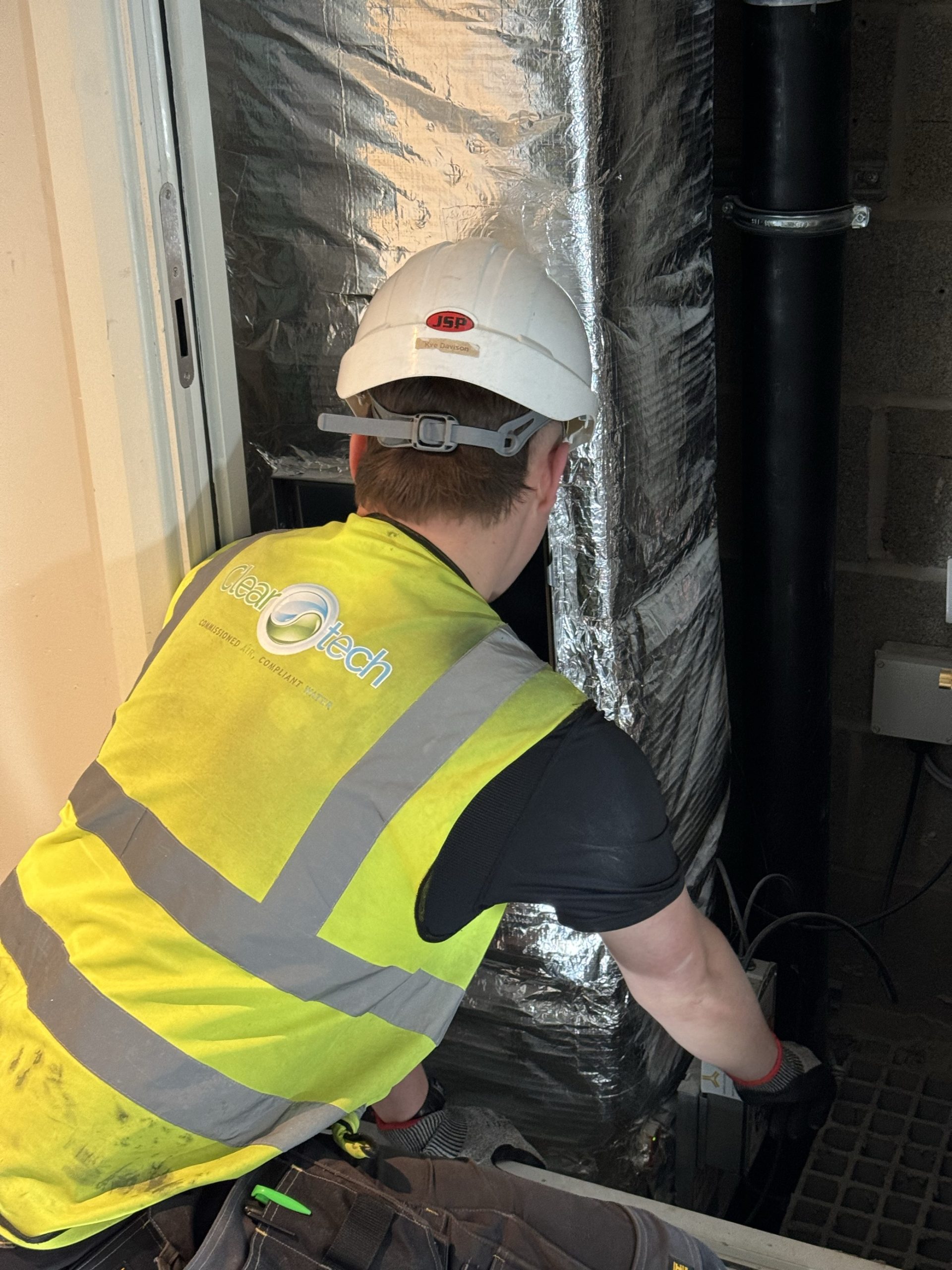
Fire dampers are one of the most critical fire safety mechanisms in a building, however, they can be easily overlooked as they are hidden within the HVAC ductwork. Fire dampers play an essential role in stopping the spread of fire and smoke across structural barriers, but because they’re out of sight, they’re often out of mind until something goes wrong.
Being aware of the warning signs that your fire dampers require maintenance can mean the difference between a simple inspection and expensive non-compliance. Although regular fire damper inspections are required by law, building owners, landlords and facilities managers can stay on top of their fire safety obligations by being aware of what to look out for in between scheduled visits.
In this blog, we’ll explain the warning signs you should look for that show your fire dampers may need inspecting, and what to do if you notice them.
What Are Fire Dampers, and Why Are They Important?
Fire dampers are found within the HVAC systems of buildings and are specialised mechanical fire safety components. During a fire emergency, their main job is to stop fire from spreading through structural barriers and ventilation systems. Fire dampers normally remain open to allow air to pass through a building, but when sufficient heat is detected, a thermal fusible link melts, causing the damper blades to shut. By doing this, the ductwork is sealed and the structural fire barrier is maintained.
During a fire, fire dampers help compartmentalise the building, containing the fire within a particular area and giving occupants more time to evacuate safely. Without working fire dampers, a building’s fire compartmentation system may fail, allowing fire to spread through the ductwork.
You can learn more about what fire dampers are and why they are important in our complete guide.
Why Correct Fire Damper Installation Matters
For a fire damper to offer the right level of fire protection, it must be installed and operated correctly. The effectiveness of fire dampers can be affected by incorrect installation, which could allow smoke and fire to spread throughout a building.
To guarantee that fire dampers are properly positioned, secured, and integrated with the surrounding construction, they must be installed in compliance with all applicable installation criteria, including DW145.
This means that examining a fire damper should involve more than just making sure it works. To make sure the building’s fire safety precautions and compartmentation are being maintained, the installation itself should be evaluated.
Why Regular Fire Damper Inspection and Testing Matter
Fire damper inspection and testing is not simply encouraged; it is a legal requirement. BS 9999:2017 recommends fire dampers should be tested at least once every 12 months, with more regular testing necessary in areas that are polluted or dusty. HTM 05-02 suggests testing every six months in healthcare settings.
The Responsible Person is legally required to maintain and operate all fire safety measures, including fire dampers, under the relevant fire safety legislation for their nation. In England and Wales, this is the Regulatory Reform (Fire Safety) Order 2005. In Scotland, the equivalent legislation is the Fire (Scotland) Act 2005, and in Northern Ireland, the Fire and Rescue Services (Northern Ireland) Order 2006 applies.
Beyond compliance, routine testing is crucial for protecting building occupants, reducing business risk and identifying problems before they require more extensive corrective work. A fire damper that does not work correctly during an emergency could have serious consequences.
Learn more about Cleartech’s professional fire damper inspection and testing service.
10 Warning Signs Your Fire Dampers Need Inspecting
Knowing what to look out for can help you spot any fire damper issues before they become serious, here are some of the most common signs that your fire damper may need professional attention:
Fire Dampers Haven’t Been Inspected for Over a Year
To maintain compliance and guarantee your fire dampers work correctly, the fire dampers should have routine inspections. If your fire dampers haven’t been tested in over a year, then it’s time to book in an inspection.
Recent HVAC Changes or Renovations
The function of your fire damper may be impacted by renovations or changes to your HVAC system. An inspection will let you know if they continue to work correctly or not.
Visible Rust or Corrosion
Corrosion or rust can affect a fire dampers ability to close and work effectively against in a fire emergency; therefore, they should be inspected thoroughly if any deterioration has been spotted.
Dust and Debris Around the Fire Damper
Dust and debris can prevent a fire damper from properly closing, but regular inspections will help identify and remove any obstructions.
Your Fire Damper Doesn’t Fully Close
A fire damper that doesn’t fully close can’t provide protection against fire that it’s designed to do. An inspection is required if this is the case.
Missing or Damaged Fusible Links
Missing or damaged fusible links can stop a fire damper from activating correctly. These should be replaced as part of a professional inspection.
Access Points are Broken or Unreachable
Fire dampers should be safe to check and maintain because of access hatches. If they are broken or unreachable, these need to be repaired so fire damper can be accessed and tested properly.
No Asset Register or Inspection Records
It is challenging to prove compliance without an asset register or inspection records. Updating records becomes easier and routine when regular inspections take place.
Concerns Raised Through a Fire Safety Audit
Your fire dampers should be inspected right away to address any concerns if a fire safety audit finds problems with them.
Building Occupancy or Use Has Changed
Fire safety regulations may change if a building’s occupancy or usage changes. Their continued suitability and compliance will be verified by a fire damper check.
Incorrect or Unverified Installation
If there are concerns about how a fire damper’s been installed, or no evidence it’s been checked, a competent person should assess it. Incorrect installation can compromise fire compartmentation.
If you have noticed any of the warning signs above, don’t wait until your next scheduled inspection; arrange an assessment by a competent engineer as soon as possible. Fire dampers are a life safety system, and any concerns should be assessed promptly by a competent engineer. Get in touch with the Cleartech team today to book your inspection.
Fire Damper Warning-Sign Checklist
This checklist can help responsible persons and facilities managers identify visible concerns between scheduled inspections. It does not replace professional testing by a competent person.
☐ Visible corrosion or rust on damper components
☐ Damaged or missing access hatch
☐ Excessive dust or debris around the damper
☐ Missing identification labels
☐ No recent inspection records or asset register
☐ Building recently refurbished or altered
☐ HVAC system modifications carried out
☐ No inspection completed in the last 12 months
☐ Concerns about the fire damper installation
If you have ticked any of the above warning signs, your fire dampers may need further assessment by a competent engineer.
When Should Fire Damper Warning Signs Be Professionally Assessed?
To ensure that fire dampers are working properly and remaining compliant, professional fire damper checks should be scheduled as part of a routine fire damper service. Additionally, inspections should be performed after renovations, after HVAC alterations, if any warning indicators show up, or if a fire safety audit has showed concerns. Frequent inspections make sure that your fire dampers continue to function as they should and help detect problems early.
What to Do When You Notice Fire Damper Warning Signs
Responding promptly to visible warning signs can help identify faults before more extensive corrective work is required. Professional testing helps confirm whether fire dampers are operating correctly, rather than waiting for a fire safety audit or another issue to reveal a potentially serious fault.
When warning signs are identified, a professional assessment may include a full visual and internal inspection, functional drop testing where safe and accessible, cleaning of contaminated units, photographic evidence and a comprehensive compliance report with any corrective recommendations outlined and explained.
Need a Professional Fire Damper Inspection?
Cleartech’s fire damper inspection and testing services help building owners, responsible persons and facilities managers identify potential faults and maintain effective fire safety measures. Our experienced team carries out thorough inspections and functional testing, supported by clear reporting and practical recommendations where issues are identified.
With extensive experience across a wide range of buildings and sectors, our competent team provides professional fire damper testing with a strong focus on safety, compliance and reliable documentation. If you’ve noticed any of the warning signs above, or you’re unsure when your fire dampers were last inspected, get in touch with Cleartech to arrange a professional fire damper inspection.
FAQs
Who should respond to fire damper warning signs?
The responsible person or relevant duty holder should record any concerns and arrange an assessment by a competent engineer. Depending on the premises and applicable legislation, this may be the building owner, employer, landlord or facilities manager.
What happens if a fire damper fault is identified?
The fault should be documented, assessed and accompanied by a recommended corrective action. Problems may relate to the damper’s operation, installation, accessibility or surrounding fire stopping. Any necessary corrective work should be completed and recorded.
Can I check my fire dampers myself?
A basic visual check may help identify visible warning signs such as corrosion, accumulated debris, damaged access hatches or missing identification labels. However, the damper should not be dismantled or manually operated by an unqualified person. Professional testing should be completed by a competent engineer.
Should fire dampers be checked after HVAC alterations?
Yes. Changes to ductwork, ceilings or other parts of the HVAC system can affect damper accessibility, installation and operation. If alterations have taken place, the responsible person should determine whether a professional assessment is required.
What should I do if a fire damper is inaccessible?
Record the location and access problem rather than ignoring the damper. A competent engineer can assess whether an appropriate access hatch or another suitable access arrangement is required before testing can be completed.
Can visible rust or corrosion affect a fire damper?
Yes. Corrosion may affect the blades, frame or other components and could prevent the damper from operating correctly. Visible deterioration should be documented and assessed by a competent engineer.

