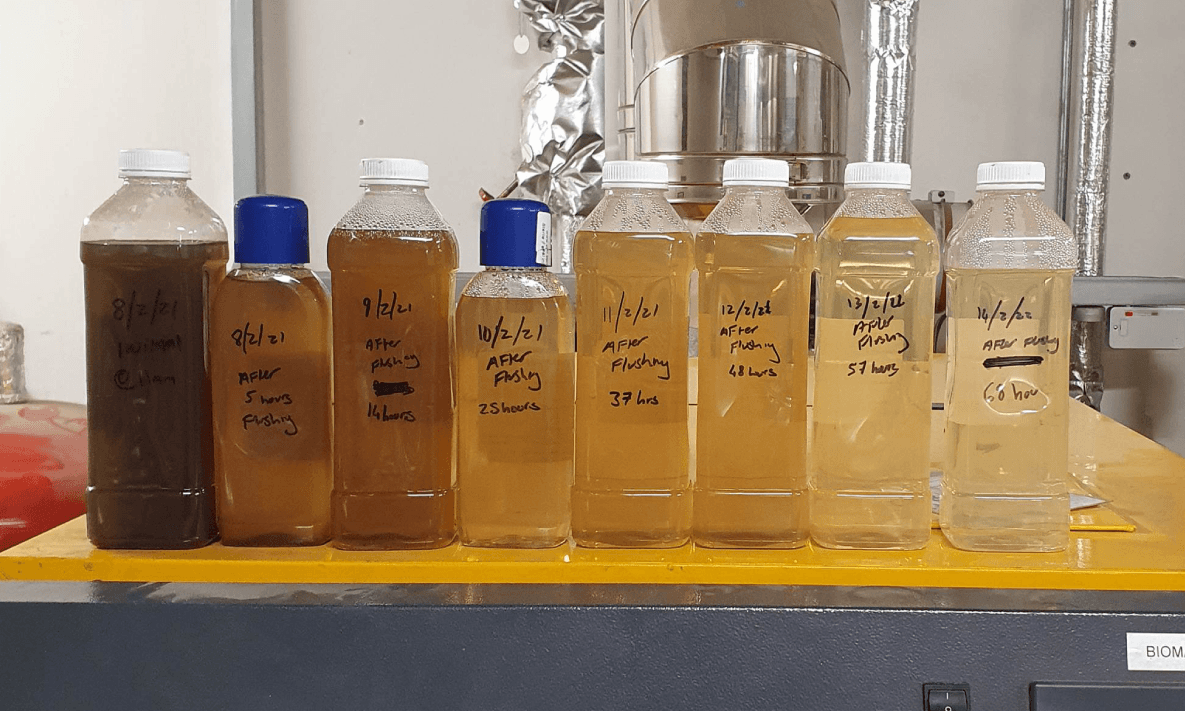
Commonly found in commercial buildings, hospitals and industrial premises, closed water systems provide an efficient way for cooling and heating systems by continuously circulating the same water through sealed pipes and equipment. This water isn’t regularly exposed to the atmosphere or elements, so it’s usually assumed that no problems can arise, and closed loop water treatment isn’t required, which is not true.
As closed water systems are out of sight, they tend to be out of mind, and issues such as corrosion in closed water systems, sludge build up in heating systems and poor water quality go unnoticed. Without closed water system treatment, these problems can advance and cause issues with the system, affecting performance, impacting energy efficiency and equipment lifespan.
Within this guide, key signs your closed water system needs treatment will be explained, as will common causes of issues with closed water systems and the risks of leaving them untreated.
If the responsibility of maintaining a closed water system sits on your shoulders, this guide will be crucial to understanding the warning signs to look for, how to keep them safe and avoid expensive repairs.
What Is a Closed Water System, and Why Does It Need Treatment?
Closed water systems are commonly used within buildings to heat or cool the building via radiators, radiant panels, underfloor heating, fan coil units and several other systems. This works by using the same water through pipes, continuously circulating through flow and return pipework from pump sets within the plantroom throughout the system and building. The advantage of this system is that it remains efficient and lowers water consumption, however, it is not completely safe from water quality risks.
Over time, issues can arise such as corrosion, sludge build-up and poor water quality, but as closed water systems are hidden, these issues can be unnoticed for months to even years. When these issues do eventually show themselves in ways such as increased energy bills or fully damaged systems, it can be an expensive repair, such as boiler or chiller replacements.
Industry guidance such as BSRIA Guide 50/2013 highlights the importance of maintaining water quality in closed-loop heating and cooling systems, and expensive repairs can be avoided by having your closed water system regularly tested with sample results logged, and having these results examined by water treatment specialists. This allows early intervention if any problems are present and corrective action to be put in place before larger, more expensive issues arise.
The Warning Signs You Need Closed Loop Water Treatment
Early detection of a closed water system issue can prevent future costly repairs, lost productivity, and unneeded downtime. Quarterly, or six-monthly samples, allow accurate results to be logged and site-specific corrective action to be carried out, reducing the risk of system failure. Below are the most common symptoms of poor water quality in HVAC systems, what they mean, and why they shouldn’t be ignored.
Poor Heat Transfer
When there are issues building up within your closed water system, a key sign is poor heat transfer, and radiators not heating properly is often one of the first things people notice. The physical signs of poor heat transfer creep in gradually, and when it’s noticeable it usually means the problem has been ongoing for a while. Physical signs you can start to notice are:
- Cold spots in heating systems
- Inconsistent temperatures throughout your building
- Longer warm up and cool down times in the systems
- Noisy heating system pipes
When these issues come to light, they can point to other problems within the system. Cold spots in radiators are due to sludge build-up interrupting hot water from circulating efficiently, and longer warm-up and cool-down times tell the same story. Both issues prove that your closed water system is working overtime to achieve a result that it once did efficiently, and that extra effort means energy bills skyrocket. If your closed water system is tested and treated effectively and consistently, all of this can be avoided, saving you time, money, and energy.
Rising Energy Costs
As touched on previously, when your closed water system stops working efficiently, not only does it affect the system and cause problems, but it also impacts your wallet. Regardless of the issues, whether it be poor water quality, corrosion in closed water systems or sludge in heating systems, inefficient boiler performance means your energy bills will rise while also paying for repairs. Your energy bills are negatively impacted due to:
- Boilers and chillers working harder than designed
- Pumps running inefficiently against sludge and magnetite
- Longer run times to reach target temperatures
- Heat being lost rather than transferred through fouled surfaces
When discussing closed water systems and their efficiency or need for treatment, the impact on energy bills is often overlooked. Maintaining your closed water system doesn’t just keep its processes running smoothly or repair costs low; it also saves your wallet in the long term. As highlighted throughout, the common issues with closed water systems develop slowly, over months if not years. If your energy bills are quietly rising due to closed water system problems (a sign of increased energy consumption in HVAC systems) the cost adds up to an extraordinary amount that could have been completely avoided.
Corrosion and Leaks
Corrosion is seen as one of the most common problems found within closed water systems and can lead to complete loss of structural integrity. Corrosion essentially is when water attacks the metal structures from the inside out such as pipework, radiators, valves and heat exchangers. Corrosion is essentially the catalyst to more problems within your water system down the line, as the byproduct of corrosion of these metal structures is what creates sludge and magnetite and settles in the water system, leading to bigger, expensive problems. The most common causes of corrosion in closed water systems are:
- Oxygen entering the system: oxygen in the water triggers a chemical reaction with metal surfaces, starting the corrosion process
- Incorrect chemical balance: water that is too acidic or too alkaline becomes aggressive toward metal structures, speeding up rate at which they break down.
- Low inhibitor levels: without sufficient inhibitor, the protective layer over metal surfaces breaks down, leaving unprotected metal exposed to the water flowing over it continuously
As with other faults, corrosion happens steadily over time, and can work its way through pipe walls, fittings and surfaces, until the structures can no longer handle the pressure of their daily job and eventually breaking down. If your system is affected by corrosion, key signs to look for are:
- Rust staining: suggests that corrosion is already underway within the system
- Pinhole leaks: shows that corrosion has eaten through the pipe wall, and there is a high chance more will develop
- Corroded Valves and fittings: stiff or leaking valves and fittings can suggest the damage is progressive
The warning signs listed shouldn’t be ignored as they all point to internal corrosion in different ways, and when these signs are present, the costs can stack up quickly. From pipe repairs, structural replacements, and full closed water system downtime, this creates an impact on business operations.
The solution to combat these potential problems is regular water testing and closed system water treatment. Testing will highlight the warning signs before they become a serious issue, and water treatment will control corrosion before it spreads. This significantly lowers the risk of having a full-scale corrosion problem and lowers costs drastically.
Frequent Maintenance Issues
If you need frequent maintenance on a closed water system, it might just feel like constant bad luck, but recurring faults can be a sign that there is a deeper issue with the system that needs a different approach. Common recurring faults include:
- Frequent Pump Failures
- Blocked Strainers and Filters
- Sticking Valves
- Air Locks / Recurring Air in Heating Systems
- Unexplained Pressure Loss
- Discoloured System Water (brown, black or cloudy)
If you keep experiencing the same faults, it is important to try identifying any patterns rather than simply addressing each one as it comes. Replacing the same structures on every maintenance visit without investigating deeper is essentially treating the symptom rather than the cause, the problem will just keep coming back, wasting your time and money.
To break that cycle, a simple water sample can be your solution. It identifies the root cause of the problems you are experiencing, meaning the system can be fixed properly rather than repeatedly patched, saving you time, money, and energy in the long run.
Failed Water Quality Testing
Water quality testing for closed systems is vital for maintaining efficiency, safety and increasing life expectancy of the system and its functions. Water testing makes sure that the water within the system meets the established standards, allowing the prevention of possible issues such as corrosion, scale build-up and microbial growth.
BSRIA recommend testing in the first 1-3 months of having your closed water system installed, then to test regularly thereafter to catch any potential problems building up. Regular testing will highlight any serious, underlying issues to come to light, allowing early intervention. Indicators that we focus on and can explain to us the health of your closed water system are:
- PH levels
- Conductivity
- Iron content
- Inhibitor concentration
- Microbiological activity
Before any physical signs appear, water testing will show straight away if any problems are brewing that could cause serious issues further down the line. This is exactly why regular testing and monitoring of your closed water system is so important, and if any concerns do arise during testing, then the appropriate closed system water treatment can be applied to bring the system back to the correct standards, before issues get the chance to develop.
What Causes Problems in Closed Water Systems, and What Happens If You Ignore Them?
Closed system performance issues often go unnoticed until they become costly, and there is usually an underlying reason that started small and progressed over time. Understanding the underlying causes, and testing or treating for them is the first step in stopping them causing chaos.
The most common causes of problems in closed water systems are:
- Oxygen entering through leaks or maintenance work
- Poor commissioning or inadequate flushing
- Low inhibitor levels
- Lack of continuous monitoring
- System modifications introducing contamination
- Ageing equipment and pipework
Your closed water system can look physically in shape from the outside, but this does not make it invincible to water quality issues, essentially meaning that issues can develop over time from the inside out.
If these causes are left alone, this could result in:
- Reduced energy efficiency
- Higher operating costs
- Increased maintenance expenditure
- Premature equipment failure
- Unexpected downtime
- Shortened lifespan
- More expensive corrective work compared to preventative treatment
Of all the possible results listed above, they can all be linked back to one or several causes in the first list. By finding and acting on the possible causes early, from regular monitoring and providing closed loop water treatment, this can stop any potential issues in its tracks from becoming bigger, more expensive and more complex problems in future.
Although the financial and practical impact can be heavy, there is also a legal aspect to maintaining your closed water system. Under ACOP L8, the Approved Code of Practice that governs legionella control and water system safety within the UK, persons responsible for a premises have a duty of care to guarantee their water systems are compliant and regularly monitored. Overlooking the water quality in your closed water system is a failure of duty and can carry consequences. If you’re unsure about your closed water system meeting the required standards, our compliance and legionella service covers everything you need to know.
I’ve Spotted These Signs in My System… What Do I Do Now?
If you have spotted any of the signs covered in this blog, an important thing to know is that spotting them early gives you the best chance of avoiding serious damage. However, ignoring them or hoping they resolve themselves is not an option as the problems that develop inside a closed water system do not go away on their own, they only get worse and progress over time.
The first step is to arrange a water test. This takes the ‘unknown’ out of the situation and gives you a clear, accurate picture of what is happening inside your system. This will assess inhibitor levels, pH balance, corrosion indicators and contamination.
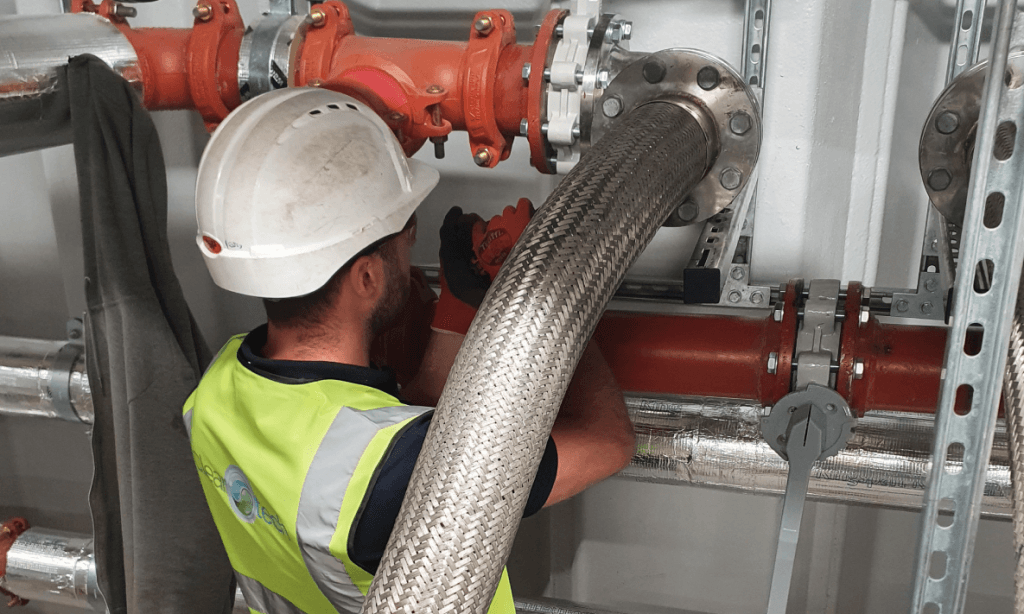
Along with testing, bringing in a competent water treatment specialist will make the process straightforward. When selecting a specialist, it is important to choose a company that works in line with recognised industry standards. Cleartech is a member of the Closed Systems Control Association (CSCA), an independent and non-profit organisation that supports best practice in the cleaning, treatment and monitoring of closed water systems. Membership gives clients additional confidence that work is carried out correctly, efficiently, and in line with industry guidance and quality standards.
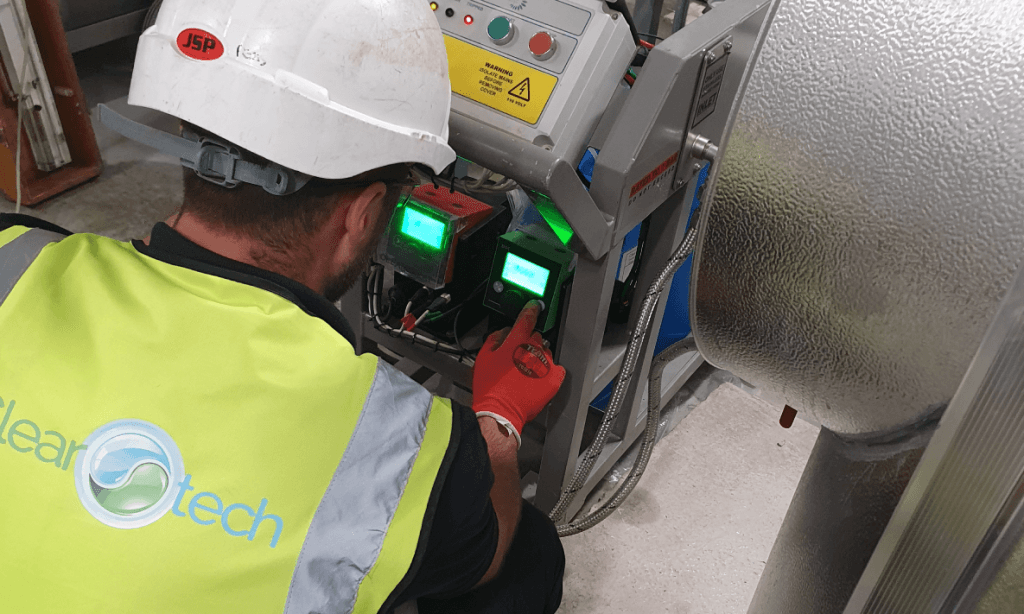
Cleartech carry out closed water system treatment across the UK, working with building owners and facilities managers to identify problems, restore systems to the correct standard, and put a monitoring programme in place to make sure those problems don’t come back.
The benefits of closed loop water treatment go beyond protecting your system, they extend to energy savings, reduced maintenance costs and longer equipment lifespan. If you have any concerns about your closed water system or would like to arrange a water sample or site visit, get in touch with the Cleartech team today.
FAQs
How do I know if my closed water system needs treatment?
Discoloured system water, cold spots in radiators, rising energy bills, frequent pump failures and recurring maintenance issues all indicate something is wrong internally. Dirty system water (whether black, brown, green or cloudy) is a clear sign that closed water system treatment is required. If any of these signs are present, arranging a water test is the first step.
What causes sludge in a closed water system?
Sludge in heating systems builds up over time from corrosion particles, dirt, scale and degraded chemicals. The most dangerous component is magnetite; a fine, abrasive iron oxide produced from corrosion of steel and iron pipework. Magnetite build-up clings to internal surfaces, causing reduced circulation, fouled heat exchangers and premature equipment failure.
What are the signs of corrosion in a closed heating system?
Corrosion in closed water systems typically shows itself through rust staining, pinhole leaks in pipework, and stiff or leaking valves. Brown or rusty system water is also a key sign of early-stage pipework corrosion. If these signs are visible, closed loop system corrosion has usually been developing internally for some time.
How often should a closed water system be tested?
BSRIA recommends water quality testing for closed systems within the first 1-3 months of installation, then regularly thereafter. Closed system water chemistry can drift over time which can accelerate corrosion if left unchecked. Regular inhibitor testing allows concerns to be caught and treated before they become serious.
Why is my closed loop system losing efficiency?
The most likely cause is a water quality issue developing over time. Scale, sludge and fouled heat exchangers act as insulation on internal surfaces, preventing heat from transferring properly and forcing boilers and chillers to work harder than designed. This leads to longer run times, increased energy usage and higher energy costs.
How can corrosion in a closed water system be prevented?
The most effective way is through consistent water testing and closed loop water treatment. Maintaining the correct water chemistry protects internal metal surfaces, and regular system water analysis catches any issues before they cause damage. Prevention is always cheaper than the corrective work once corrosion has taken hold.

