Some believe commissioning management is a simple ‘final check’ on a building, but this is not the case. Commissioning management services are required throughout the entire construction process, as effective commissioning begins during the design phase and continues throughout construction, testing and completion.
Without building commissioning, even the most well-built facilities may not meet operating efficiency, compliance standards, and planned performance. No matter the industry, commissioning management is relevant; from healthcare and education, to commercial and industrial. In this blog, we’ll explain how commissioning management keeps projects on time, within budget, and compliant, and why Cleartech are the correct people to do it.
What Is Commissioning Management?
Before we explain why commissioning management is important for projects, it’s important to understand the actual role of commissioning management. Commissioning management is the co-ordination and management of all commissioning tasks within construction of a facility. Overseeing all commissioning projects means that all building systems can be verified, tested, and approved in line with the project and design specifications. However, it’s important to know that there is a difference between commissioning itself, and commissioning management:
Commissioning itself involves testing individual building systems, however, commissioning management ensures these activities are properly planned, documented and coordinated across contractors, consultants and the client.
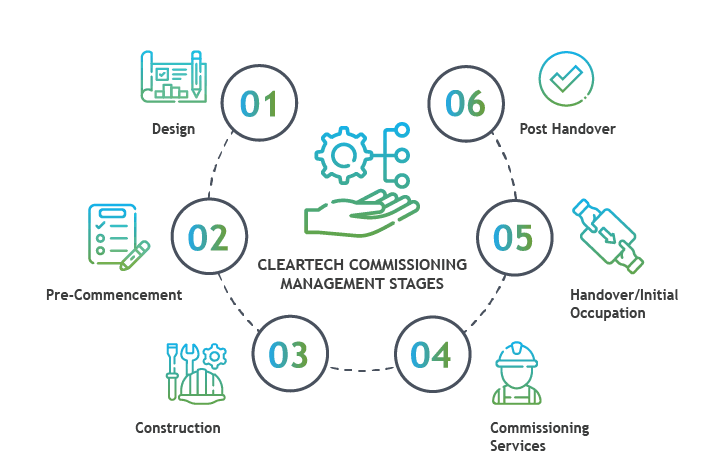
As previously mentioned, commissioning management isn’t one singular check, this takes place throughout the full project, and commissioning management begins within the design stage. This first stage is where designs will be reviewed, and a strategy alongside commissioning plans will be developed by the commissioning manager all the way through to completion of the project.
Learn more about Cleartech’s Commissioning Management Services, and how we support projects from design through to completion.
How Does Commissioning Management Keep Projects on Time?
A huge benefit of commissioning management is keeping the project on track and to the correct timescale. This is because the dedicated commissioning manager will create a commissioning plan and strategy, while also accounting for any possible issues that could arise and plan accordingly.
A detailed commissioning plan is the foundation of keeping a project on schedule. It identifies everything needed to coordinate the commissioning process effectively, including:
- The systems that must be commissioned
- Key commissioning milestones and programme dates
- Individual roles and responsibilities across all parties
- Testing and verification requirements
- Reporting and documentation procedures
- Dependencies between different contractors and systems
With this plan in place, the Commissioning Manager can provide consistent communication between contractors, subcontractors and the client, reducing the risk of misunderstandings and keeping all parties aligned. Regular progress tracking and reporting ensures milestones are met and testing is carried out on schedule, allowing the project to move forward smoothly and on time.
How Does Commissioning Management Help Control Costs?
Commissioning management services are effective in controlling project costs and budgets as it allows early identification of potential problems, project management and less corrective works to take place.
As any possible problems are identified and planned for, this means corrective works are less likely to take place, therefore less time and money spent. In terms or project management, it’s mentioned beforehand that everyone involved in the project are aware of their roles and responsibilities meaning less likely chance of misunderstandings, duplicated work, missing work or coordination gaps.
In the long run, it is far more practical to invest in commissioning management from the beginning rather than trying to address failing systems after completion, where problems are much more expensive and disruptive to fix.
How Does Commissioning Management Support Compliance?
Commissioning compliance is an important and integral part of any construction project, and it’s important to know that building commissioning is required to meet industry standards and regulations such as BSRIA guidance, CIBSE Commissioning Codes and aspects of the Building Safety Act 2022.
As commissioning management is required to meet these standards, it further emphasises the importance of record keeping, having a clear audit trail of testing, thorough inspections and sign-offs completed across all new systems within the project.
All forms of documentation create the ‘Golden Thread’, which supports building safety requirements and forms part of the records kept well after completion of the project. After completion, full testing and verification processes take place to prove all systems are working and fully compliant. Building commissioning responsibilities don’t end when the initial project is complete; ongoing compliance remains, such as seasonal testing and soft landings, to make sure the systems continue to work efficiently and as intended before the building moves into full occupation.
Why Choose Cleartech for Commissioning Management?
Cleartech’s commissioning management services help projects stay on time, within budget and remain compliant throughout. We pride ourselves on having a technically well-rounded team that bring both mechanical and electrical expertise to our commissioning management services.
With over 20 years of experience, we have provided commissioning management across a wide range of industries, including healthcare, education and commercial. We take a collaborative approach within our commissioning services, working closely with contractors, subcontractors, consultants and clients, as we believe this is a key aspect to keeping projects on time, within budget and compliant. Due to our commitment to training and development, our commissioning management team always remain competent, qualified and equipped to provide commissioning management to the highest standard. Get in touch with us to see how we can help you with your next project.
FAQ’s
What is commissioning management?
Commissioning management is the co-ordination and management of all commissioning tasks within construction of a facility. Overseeing all commissioning projects means that all building systems can be verified, tested, and approved in line with the project and design specifications. Commissioning management oversees all commissioning activities, ensuring they remain compliant across a project.
What is included in commissioning management services?
Commissioning management services include overseeing and managing all commissioning activities throughout the full construction process, from design to completion. This includes reviewing designs, developing commissioning plans and strategies, verifying, testing and approving building systems, providing consistent communication between contractors, subcontractors and the client, and making sure all systems are handed over working precisely as they should.
How does commissioning management improve project delivery?
Commissioning management improves project delivery by making sure every system is designed, installed, tested and handed over working precisely as it should. The commissioning manager will create a commissioning plan and strategy, identify roles and responsibilities, provide consistent communication between contractors, subcontractors and the client, and spot any problems early that could arise and fix promptly.
How does commissioning management control project costs?
Commissioning management services are effective in controlling project costs and budgets as it allows early issue identification, project management and reduced corrective works to take place. As any possible issues are identified and planned for, corrective works are less likely to take place, therefore less time and money is spent. It is far more practical to invest in construction commissioning from the beginning rather than trying to address failing systems after handover, where problems are much more expensive and disruptive to fix.
How does commissioning management maintain compliance throughout the project?
Commissioning compliance is an important and integral part of any construction project, and building commissioning is required to meet industry standards and regulations such as BSRIA guidance, CIBSE Commissioning Codes and aspects of the Building Safety Act 2022. Commissioning management ensures the importance of record keeping, having a clear audit trail of testing, thorough inspections and sign-offs completed across all new systems within the project. All forms of documentation create the ‘Golden Thread’, which supports building safety requirements and forms part of the records kept well after completion of the project.

