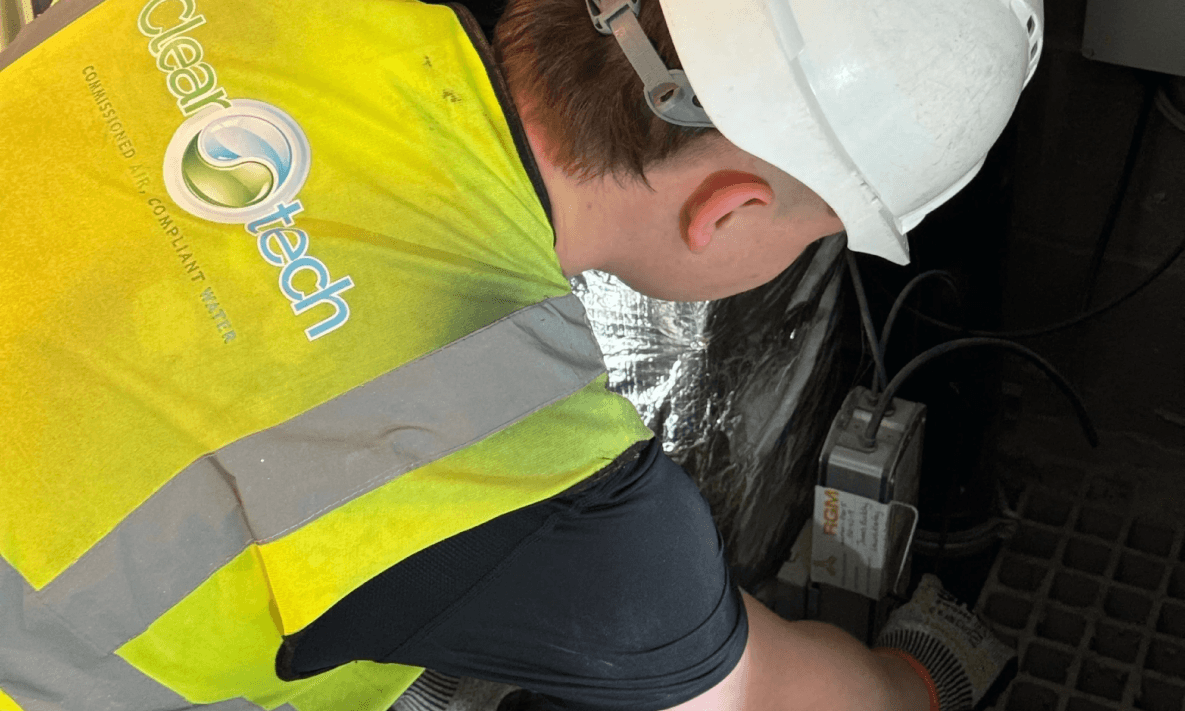
You’re aware of fire alarms and fire extinguishers… but what about fire dampers?
Fire dampers usually go unnoticed, but they are one of the first lines of defence against fire and classified as a Life Safety System*.
*Life Safety System: applies to any system incorporated into a building whose purpose is the protection and preservation of human life during an emergency.
Fire dampers are a necessity in terms of compliance, legality, and safety. They can halt damage to your property from fire and keep evacuation routes safe for people, but do you know how to maintain them and their regulations?
In this article, you’ll find how to keep your fire dampers safe, legal and compliant, and how to ensure they’ll work when they’re needed most.
What are Fire Dampers?
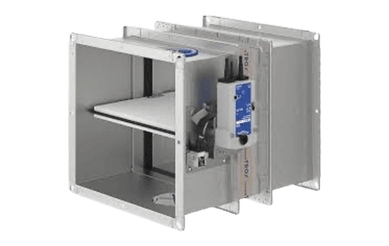
In short, fire dampers are a fire protective device that are installed within the ductwork of HVAC systems. When triggered by fire or smoke, they shut to prevent the spread of fire, gases and smoke. This stops damage to the building and preserves evacuation routes for people to exit safely.
How Do Fire Dampers Work?
In everyday use, fire dampers remain open and allow airflow throughout the HVAC system. When fire or smoke are detected, a fire damper will automatically shut, resulting in compartmentation. Compartmentation essentially keeps fire and smoke in one area of the building, allowing extra time for people to escape and retains the structure and integrity of the building.
Where are Fire Dampers Required?
Fire dampers aren’t just placed randomly; they are installed at critical ‘breach points’ in a building’s structure. Common locations include:
- Fire-Rated Walls: Where ductwork passes through partitions designed to contain fire.
- Floor & Ceiling Assemblies: To prevent flames from jumping between levels.
- HVAC Ductwork: Acting as a safety ‘gate’ within the ventilation system itself.
- Plant Rooms: Protecting the rest of the building from high-risk machinery areas.
Having Passive Fire Protection (PFP) is crucial for building integrity, safety of people, providing compartmentation, and assisting firefighters in the event of an emergency. This is a regulatory requirement as seen in Approved Document B, and should be adhered to, and tested regularly.
Different Types of Fire Dampers
There are many different types of fire dampers, each suiting different locations within a building and ductwork. These are known as curtain, intumescent and multi-blade, and they each have different mechanisms in how they prevent the spread of fire and smoke. Depending on the size and location of the building and ductwork, some may be preferable to others.
Fire dampers can also be defined further by their approach to how they effectively work. These typically are ither thermally released by a fusible link, or motorised:
- Thermal Release
Fire dampers can be secured with a fusible link, holding the fire damper in place and allowing free air flow. At around 72°C, these links hit melting point, allowing gravity to overtake and the fire damper snapping shut. This approach requires no electricity and activates solely off a heat signal from fire.
- Motorised
Motorised fire dampers rely on electricity as one method of reacting, instantly closing when a fire alarm is activated. They also can react to temperature rising above 72°C. By being electrically powered, this system allows a quicker response time and is mandatory for areas where immediate smoke management is required. Motorised fire dampers are commonly found in higher-risk buildings such as hospitals, care facilities, and sleeping accommodation, where faster response and enhanced smoke control can be important.
Fire Damper Regulation and Compliance
Fire dampers have regulations and compliance requirements surrounding them in the UK. Fire damper regulations state they must be installed within ventilation ductwork that passes through fire-rated walls or floors, allowing compartmentation and essential fire safety. Under the Regulatory Reform (Fire Safety) Order 2005, maintenance of fire dampers is a legal obligation, and must be carried out by ‘Responsible Persons’ to ensure fire dampers can effectively compartmentalise and work against a fire emergency.
The term ‘Responsible Persons’ can include:
- Building Owners
- Duty Holders
- Facility Manager
- Landlords
- Employer
While there is legal duty upon the ‘Responsible Persons’, the physical installation and fire damper inspection must be carried out by ‘Competent Person’. A Competent Person is an individual or business with specific, intricate and technical knowledge and equipment to perform full installation and fire damper testing. This includes manually triggering the fire damper to ensure it closes airtight and resetting it correctly, so it operates accurately and quickly if needed.
Hiring a competent person is important, as it ensures evidence-based compliance rather than ‘just a signature.’ This guarantees that your ‘Golden Thread’ of fire safety documentation is strong and will satisfy both insurers and fire authorities. It includes thorough asset registers, and photographic verification of testing. In compliance with BS 9999:2017, fire dampers must be inspected and tested by a Competent Person at least once every 12 months. To book you fire damper inspection, contact us here.
Fire Damper Testing & Maintenance
Fire dampers are usually “out of sight, out of mind,” but they’re a primary defence against the spread of smoke and fire throughout ductwork. Simply installing them isn’t enough; regular maintenance is essential to know in an emergency, the fire dampers will work appropriately, and the compartmentation of the building remains secure. Without fire dampers, fire and smoke can spread, causing danger to life and damage to the building.
How to Check Fire Dampers
Fire damper testing requirements state they should be tested annually, and by a competent person (BS9999:2017). Different environments, however, require different frequencies of testing, such as industrial kitchens or hospitals which are classed as high risk and have more chance of dust build up. Testing annually (or more) isn’t just a suggestion, this is a standard that must be met in terms of compliance and is used by fire authorities and insurance companies to ensure the Responsible Person is meeting their legal requirements.
Untested fire dampers can become a serious liability. Over time, several faults within fire dampers can arise which could cause failure if a fire were to break out. Common faults can be:
- Obstructed Access: Dampers hidden behind permanent ceilings or walls, making testing impossible without installing new access panels.
- Corrosion: Rust on the blades or frame that prevents the unit from closing airtight.
- Failed Fusible Links: Heat-sensitive links that have been damaged or incorrectly replaced, meaning the damper won’t trigger.
- Dust & Debris Build-up: Accumulation from the HVAC system that physically blocks the shutter from dropping.
- Incorrect Installation: Units installed upside down or without the required fire-stopping material around the frame.
If any of these faults were to arise, having the fire dampers tested by a Competent Person will ensure these faults are brought to light and restored, ensuring the fire dampers do not fail in the event of an emergency.
Why Fire Dampers are Critical for Building Safety
The importance and effectiveness of fire dampers is due to their ability to enforce compartmentation. Compartmentation splits up a building into sections, to contain a fire at the source and stop the spread of flame and smoke. By securing the fire to one area, fire dampers provide a crucial component in the event of an emergency: time.
Other crucial aspects having compliant fire dampers are:
- Protecting Lives
- Supporting Safe Evacuation
- Limiting Property Damage
- Insurance and Compliance Implications
At a glance…
Fire dampers may often go unnoticed, but they are one of the most important life safety systems within a building. By preventing the spread of fire and smoke through ventilation systems, they play a critical role in protecting lives, preserving escape routes, and maintaining the structural integrity of a property during an emergency.
Routine fire damper testing provides reassurance that when needed most, these systems will perform correctly and support effective compartmentation. For Responsible Persons, staying proactive with fire damper compliance is not only a legal duty, but also an essential step in protecting people, property, and business continuity.
To remain safe, compliant, and fully operational, they must be regularly inspected, tested, and maintained by a Competent Person in accordance with BS 9999:2017 and the Regulatory Reform (Fire Safety) Order 2005. Neglecting maintenance can lead to serious safety risks, legal consequences, and potential insurance complications.
Make sure your fire dampers are tested and inspected correctly, contact us today.
FAQs
What is a fire damper and what does it do?
A fire damper is a passive fire protection (PFP) device installed within HVAC ductwork. Its purpose is to automatically close when fire or smoke is detected, preventing the spread of flames, smoke, and toxic gases through ventilation systems. This helps maintain compartmentation, protects escape routes, and limits damage to the building.
Where are fire dampers typically installed?
Fire dampers are installed at critical breach points where ductwork passes through fire-rated walls, floors, ceilings, plant rooms, and other compartment lines. These locations are chosen to stop fire and smoke travelling between different areas of a building.
How often should fire dampers be tested?
Under BS 9999:2017, fire dampers should be inspected and tested at least once every 12 months by a Competent Person. High-risk environments such as hospitals, industrial kitchens, and sites with excessive dust or grease build-up may require more frequent testing.
Who is legally responsible for maintaining fire dampers?
Under the Regulatory Reform (Fire Safety) Order 2005, the ‘Responsible Person’ is legally accountable for ensuring fire dampers are maintained and compliant. This may include building owners, landlords, employers, facilities managers, or duty holders. However, inspections and testing must be carried out by a qualified Competent Person.
What are the most common fire damper faults?
Common faults include corrosion, dust and debris build-up, failed fusible links, obstructed access preventing testing, and incorrect installation. Any of these issues can prevent the fire damper from closing correctly during an emergency, compromising compartmentation and safety.
Why is regular fire damper maintenance important?
Regular maintenance ensures fire dampers will operate effectively during a fire emergency. Properly maintained dampers help protect lives, support safe evacuation, reduce property damage, and demonstrate compliance with fire safety regulations and insurance requirements.

